
Easter is one of the most eagerly awaited spring holidays in Estonia. It marks the beginning of new life, brighter days and more time spent together. Traditionally eggs are dyed, knocked together, rolled, and the swinging season begins.
In recent years, however, more and more families have discovered an especially joyful holiday activity — the egg hunt.
This simple, playful tradition turns Easter into an exciting adventure for children and helps create memories they look forward to every spring.
What is an egg hunt and where does the tradition come from?
An egg hunt means searching for hidden Easter eggs with the help of clues or a map. Today it is often associated with the Easter Bunny, who “hides” surprises for children.
The egg as a symbol of spring and new life has been known for centuries. In Europe, egg hunting became popular especially in Protestant regions, and by the 19th century the custom had reached Estonia too.
Although many consider the egg hunt a modern Western influence, it actually has a longer history than you might think.
Estonian Easter traditions: dyeing, knocking and swinging
In the Estonian folk calendar, Easter has been above all a spring festival. The best-known customs are:
- dyeing eggs with onion skins or plant patterns
- egg knocking
- egg rolling
- the start of the swinging season
These activities create a calm sense of togetherness. An egg hunt adds something new — movement, playfulness and excitement.
That's exactly why an egg hunt fits so well alongside traditional Easter customs.
How to organise an egg hunt for children?
A good egg hunt doesn't need much preparation. A few simple steps are enough.
1. Hide the eggs in different places
Choose hiding places according to the child's age. More visible spots for the little ones, trickier ones for older children.
2. Add clues or challenges
Riddles, movement challenges or picture instructions make the search more exciting.
3. Finish with the biggest surprise
If the final clue leads to a special prize, the whole experience stays with the child as a real adventure.
A simple way to hold an egg hunt without much planning
If you're short of time or ideas, a ready-made solution can be a great help.
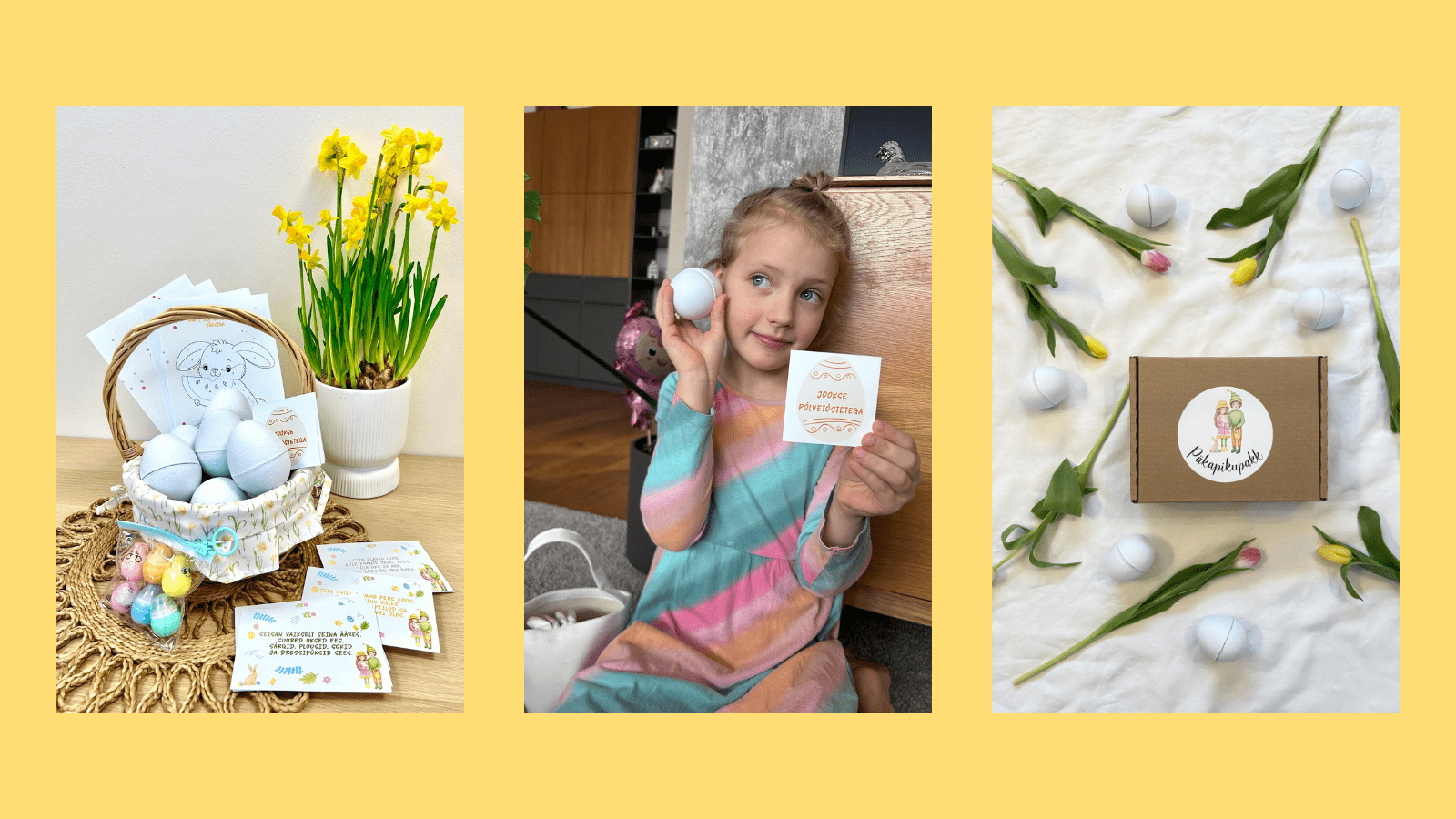
The Rūķupaka Egg Hunt pack is designed to make Easter special for children without lengthy preparation. The pack includes:
- 10 cardboard eggs
- sweet, spring-themed little surprises
- clue and movement cards
- egg-shaped markers
- instructions
- a letter from Emils and Elza
This means parents can focus on what matters most — time and joy together.
In addition, the story of Julius the Easter Bunny that comes with the pack gives the game an emotional backdrop. For children it makes the whole experience more magical and eagerly awaited.
Why could an egg hunt become your family's new spring tradition?
Traditions don't have to be centuries old to be meaningful. Often the sweetest family habits are born from simple moments.
If a little egg hunt awaits the children every spring, the holiday comes to mean:
anticipation, joy and the feeling that this time truly belongs to the family.
That's how Easter becomes something more than just a date on the calendar.
Summary: an egg hunt makes Easter memorable
Dyeing and knocking eggs keep old Estonian customs alive. An egg hunt adds playfulness and modern excitement.
And when organising it all is made easy with a ready-made solution, it's even easier to create a tradition children will look forward to year after year.
You'll find Rūķupaka Easter products and the pack HERE.